
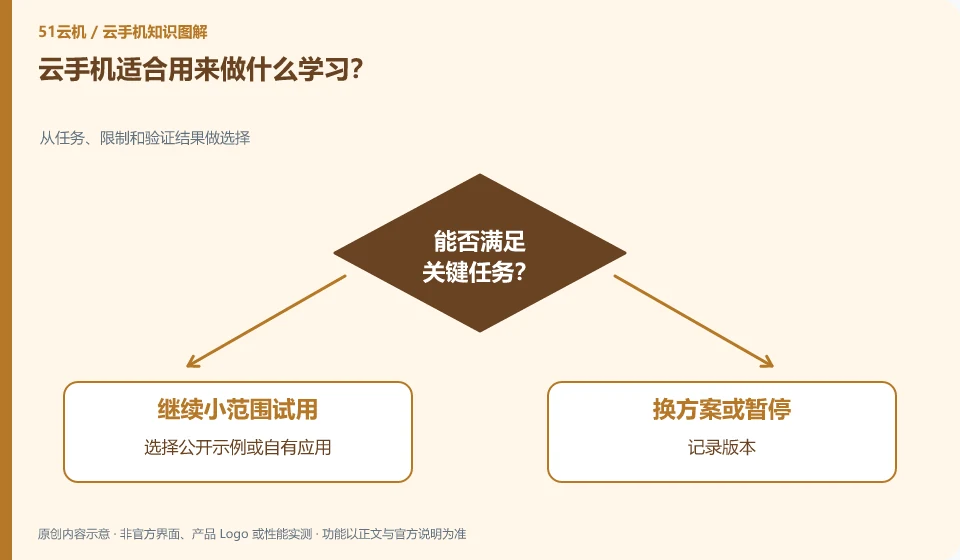
Suitable for studying Android basics, application interfaces, file permissions and authorization testing processes. Start by choosing small tasks that will validate your results.
Understand the essentials
The fact that the environment can be accessed remotely does not mean that it can simulate all real hardware conditions; the boundaries must be clear when learning.
A practical example
As a hypothetical example: Comparing the permission prompts of the same test application in two Android versions is a concrete and observable exercise.
What to check or try
- Choose from public samples or your own app.
- Record version.
- Design expected results.
- Keep screenshots and processes.
The learning objective can be written as an answerable question, such as "What happens when image permissions are denied?" Documenting expected and actual results, even if it is found that the current environment does not support it, is a valuable boundary conclusion and does not need to be written as passing for all tests.
An easy-to-miss detail
Do not extend learning tests to other people's accounts or unauthorized application data.
Continue reading
- What does running multiple cloud phone instances mean?
- Opening a cloud phone for the first time: initial checks
Back to Cloud phones: getting started
Notes and further reading
Wuying Cloud Phone documentation;Tencent Cloud Phone quick start。
This introductory guide was prepared by 51Yunji from public information with AI-assisted drafting. Examples are hypothetical, not hands-on product tests or promises of results. Follow the current product, version and official instructions for specific features and procedures. Compiled on October 26, 2026.