
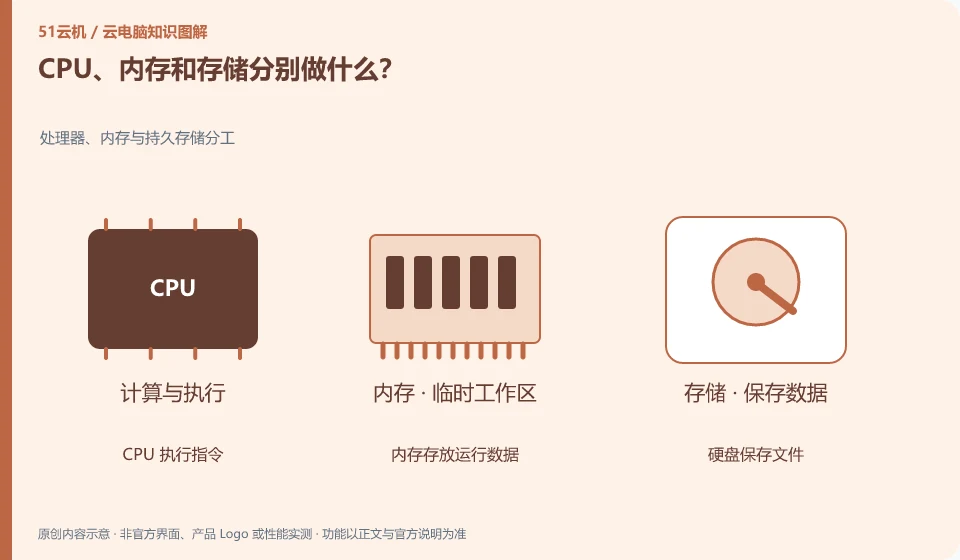
The CPU executes computing tasks
Core count, architecture, clock speed, workload and resource sharing all affect performance. The advertised number of cores alone does not tell you how a system will perform in practice.
Memory holds data used by running programs
Running programs need to keep relevant data in memory. Memory requirements usually increase when several programs run at once. Insufficient memory can cause the system to swap data to disk, slowing interaction.
Storage keeps files between sessions
Storage capacity and read/write performance measure different things. Keep independent backups of important files: remote storage alone is not a complete backup strategy.